Shock ’n‘Roll
Economic developments are currently being shaped by two opposing forces. On the demand side, investments in infrastructure, defence, and AI data centres are driving momentum. On the supply side, demographic change, deglobalization, and the energy price shock are acting as constraints. This combination is inflationary—while the growth outlook remains uncertain.

Christof Reichmuth
- Higher interest rates to counter inflation risk
- Euro and dollar remain weak currencies
- Switzerland as a store of value
The key question is: Are recessionary forces stronger, or is inflationary pressure dominant? And will central banks — like after the pandemic — attempt to look through inflationary pressure? Or will they react more restrictively this time? At present, many points to the latter. The interest rate-cutting cycle has therefore, for the time being, come to a halt.
Rising Interest Rates, Rising Risks
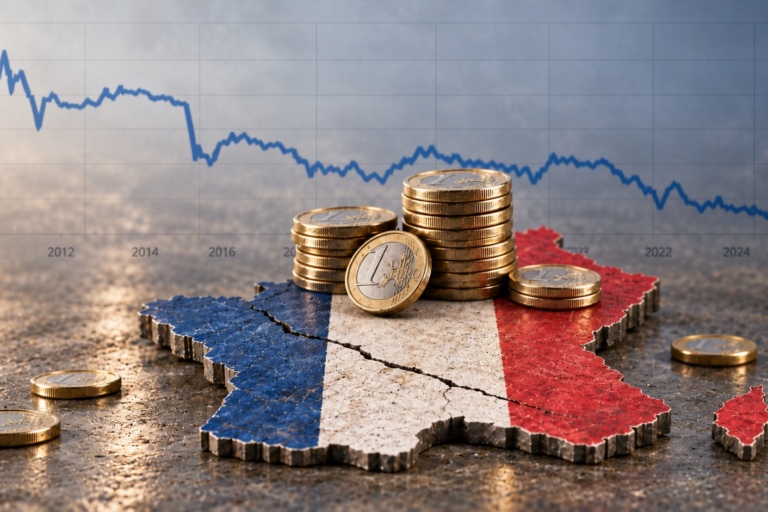
In response to higher oil prices, long-term interest rates have risen across the Western world. This increases the risk of a fiscal crisis in highly indebted countries, for example in France. There, nominal interest rates have now moved above nominal growth. With government debt at 115 percent of GDP, the country is entering the danger zone of a debt trap. French advisers close to the government are therefore calling for measures such as tariffs of up to 30 percent against China or a significant devaluation of the euro against the renminbi by 20 to 30 percent. Europe has become barely competitive, while Asian currencies offer appreciation potential.
Shifting Capital Flows
Russia fully exited U.S. Treasuries ten years ago, China has nearly halved its holdings since then, while Japan and Western nations have doubled theirs. With U.S. President Trump’s overtures toward acquiring Greenland, European appetite for U.S. debt has now also waned. This is why calls are growing in Europe for more “safe European assets.” What is meant are joint European sovereign bonds — Eurobonds.
From an economic perspective, this step is understandable, as it supports the completion of the single market, the capital markets union, and financing rising defence expenditures. Even the German Bundesbank has signalled openness — provided overall debt remains stable and issuance is limited to narrowly defined purposes. Experience suggests, however, that such reservations are politically difficult to uphold.
U.S.: High Debt, but Strong Fiscal Competence
The U.S. also suffers from excessive debt. The decisive difference: nominal growth exceeds nominal interest rates. Moreover, Scott Bessent and Kevin Warsh are expected soon to head the Treasury and central bank—two proven financial market experts. Both draw on their experience from the school of Stan Druckenmiller, an outstanding hedge fund investor who has for many years warned of unsustainable U.S. fiscal policy.
At present, the U.S. finances itself mainly through short-term debt instruments. In our view, both the U.S. dollar and the euro remain weak currencies, but due to the more competent leadership at the Treasury and the Federal Reserve, the advantages currently lie with the U.S. dollar.
Interest Rate Thresholds as Warning Signals
For the outlook ahead, we pay particular attention to 10-year bond yields. In our assessment, the critical levels are 4 percent in Europe and 5 percent in the U.S. At these thresholds, the probability of significant market corrections rises materially. Higher refinancing costs affect sovereigns, corporates, and equity valuations simultaneously.
Clarity Over Complexity
Despite this uncertainty, our strategic guiding principle remains unchanged: over the long term, real assets outperform nominal assets. Equities offer protection against inflation and participate in real growth. Equity markets may also come under pressure from the energy shock or a fiscal crisis, but companies can adapt.
Particularly resilient appear to be dividend champions with reasonable valuations. They provide recurring income and help absorb market volatility. Switzerland in particular offers a compelling universe of quality companies—complemented by international stocks in sectors where Swiss representation is limited.
Three Stores of Value
The core of every portfolio therefore remains the following three asset categories:
- Liquidity in Swiss francs: Provides flexibility and stability.
- Quality equities with strong balance sheets and reliable dividends. In addition, the energy sector is becoming increasingly important-both from a geopolitical perspective and because of the energy requirements of the emerging AI revolution.
- Gold as protection: It remains a hedge against systemic risks and currency debasement.
In uncertain times, what is needed is not activism but clarity: understand risks, remain calm, and consistently focus on quality. Only those who have chosen a strategy robust enough to remain composed in turbulent times can seize the opportunities such upheavals create.